
The copper market in 2026 is all about the fundamentals: demand is skyrocketing while new supply remains stubbornly slow to materialize. While alloys like brass and bronze grab attention for mechanical applications, pure copper—often called red copper or electrolytic tough pitch (ETP) copper—remains the undisputed king for electrical and thermal conductivity. Global refined copper consumption is on track to hit 29.5 million tons this year, with pure copper grades accounting for the lion’s share in wiring, busbars, and power infrastructure.
Prices have been volatile but firmly elevated, trading in the $11,500–$13,000 per metric ton range on the LME, supported by ongoing deficits estimated at 300,000–500,000 tons. For anyone sourcing high-conductivity copper, the message is clear: secure supply early and consider long-term contracts.
This piece dives into pure copper’s dominant position, its key variants, unique advantages, and why it’s irreplaceable in the electrification megatrend.
Key Pure Copper Grades in the Market
Pure copper comes in several high-purity forms tailored for specific performance needs:
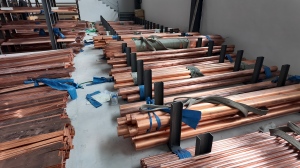
- Electrolytic Tough Pitch (ETP) Copper(C11000): The workhorse grade with 99.90%+ purity and excellent conductivity (100–101% IACS). Used universally in electrical wiring, busbars, and power cables.
- Oxygen-Free Copper (OFHC)(C10100/C10200): Ultra-high purity (99.99%+), no oxygen voids, ideal for vacuum applications, high-end audio cables, and semiconductor components.
- Deoxidized Copper(DHP/DLP): Phosphorus-deoxidized for better weldability, common in plumbing tubes, heat exchangers, and HVAC systems.
These grades make up roughly 70% of global copper consumption, primarily in electrical and electronics sectors where maximum conductivity is non-negotiable.
Pure Copper’s Critical Role in 2026
Pure copper isn’t flashy—it’s the silent backbone of modern infrastructure. Its near-perfect electrical and thermal conductivity (second only to silver, but at a fraction of the cost) makes it essential for efficient energy transfer.
Top demand drivers this year:
- Electric Vehicles: An average EV uses 80–100 kg of copper—mostly pure grades in motors, batteries, and wiring harnesses—versus just 20 kg in an ICE vehicle.
- Renewable Energy & Grid Expansion: Wind farms, solar plants, and transmission upgrades require massive volumes of high-conductivity cable and busbars to minimize losses.
- Data Centers & AI: Explosive growth in hyperscale facilities demands pure copper for power distribution and cooling systems.
- Consumer Electronics: From smartphones to home appliances, pure copper ensures reliable performance in compact designs.
Sustainability adds another layer: copper is infinitely recyclable without quality loss. Recycled pure copper now supplies over 35% of global demand, helping manufacturers meet strict ESG requirements in Europe and North America.
How Pure Copper Stacks Up Against Alloys and Alternatives
Pure copper shines where conductivity matters most, but it’s not meant for every job—that’s where alloys come in.
Advantages Over Copper Alloys:
- Superior electrical conductivity: 100%+ IACS vs. 20–60% for most brasses and bronzes.
- Excellent thermal performance: Critical for heat exchangers and EV battery cooling.
- Outstanding ductility and formability: Easy to draw into fine wire or thin foil.
- Cost-effective for high-volume electrical uses.
Trade-offs:
- Lower mechanical strength: Pure copper is softer and less wear-resistant than bronze or brass, so it needs alloying or support structures for load-bearing parts.
- More prone to oxidation without protective coatings (though OFHC grades mitigate this).
Vs. Alternatives like Aluminum: Aluminum is lighter and cheaper but conducts only ~60% as well as copper. In high-power applications (EV fast charging, grid lines), copper’s lower resistance means less heat and higher efficiency—often justifying the premium.
In short,pure copperowns the “conductivity crown” and isn’t going anywhere as long as we’re pushing more electrons through the system.
2026 Outlook: Structural Deficit Supports Strong Pricing
Supply constraints—delayed mine projects in Chile and Peru, plus energy transition bottlenecks—will likely keep markets tight. Analysts forecast average LME prices around $12,000/ton for the year, with upside risk if disruptions hit.
For buyers, focus on high-purity suppliers with strong recycled content and reliable logistics. The shift toward oxygen-free and ETP grades for next-gen applications (like 800V EV architectures) is accelerating—early adopters will have an edge.
(Views based on current market reports and industry sources; prices and forecasts subject to change.)
Post time: Jan-23-2026