
I’ve machined and supplied aluminum bronze parts for heavy-duty apps longer than I can count, and it never disappoints when you need something that shrugs off corrosion, wear, and impact in brutal conditions. Alloys like C95400, C95500 nickel-aluminum, or C95800 give you high strength, excellent seawater resistance, and that protective alumina layer that keeps rebuilding itself. It’s pricier than basic bronzes and a bit tougher on tools, but in places where downtime costs a fortune or safety is non-negotiable, aluminum bronze components keep running long after softer materials would have packed it in.
Let’s talk through the parts we make most, the industries that spec them, how they stack up against brass, tin bronze, and phosphor bronze, and the real-world role they’re playing out there.
Typical aluminum bronze heavy machinery parts – bushings, bearings, and wear components built for extreme service.
Common Parts and What They Handle
Aluminum bronze is cast, forged, or extruded into shapes that take punishment:
- Bushings & Sleeve Bearings→ Plain or grooved cylinders for pivots and oscillating motion – resist galling and embed dirt without seizing.
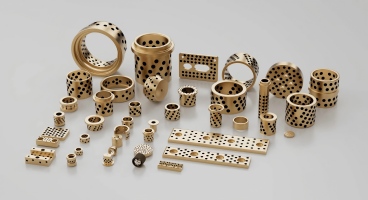
- Wear Plates & Thrust Washers→ Flat or contoured plates for sliding surfaces – spread heavy loads and fight abrasion in crushers or drags.
- Gears & Worm Wheels→ Toothed components for power transmission – high strength handles shock loads without chipping.
- Valve Bodies & Pump Impellers→ Complex castings or machined parts – stand up to cavitation and corrosive fluids.
- Propeller Nuts & Blade Holders→ Marine-specific fittings – combine strength with seawater immunity.
We produce these regularly, like ouraluminum bronze bushings, wear plates, andcustom machined parts– often withprecision CNC finishingto tight tolerances.
Industries That Depend on Aluminum Bronze
It’s a staple where environments are unforgiving:
- Mining & quarrying (crusher liners, excavator pins)
- Marine & offshore (propellers, valves, subsea gear)
- Oil & gas (downhole tools, pump components)
- Aerospace (landing gear bushings, actuators)
- Heavy construction (loader arms, crane sheaves)
Anywhere high loads meet corrosion, abrasion, or impact.
How It Compares to Brass, Tin Bronze, and Phosphor Bronze
Brass (like C36000 or C38500) machines like butter and looks great, but it’s softer – wears faster under heavy sliding and lacks strength for big structural loads. Tin bronze (C90300/C90500) excels at low-speed bearings with its embeddability and conformability, but it doesn’t match aluminum bronze’s raw tensile strength or cavitation resistance. Phosphor bronze (C51000/C52100) brings springiness and fatigue life for contacts or light bushings, but it’s not built for the massive compressive or impact forces aluminum bronze handles.
Aluminum bronze’s edge: higher yield strength (up to 100 ksi in nickel grades), superior corrosion resistance in saltwater/acids, and better wear under high pressure – all while being non-sparking for safety. Downside is it’s harder on tools and costs more upfront.
In short, if the part sees real abuse, aluminum bronze lasts longer and needs less babysitting.
The Bigger Role in Global Industry
These components aren’t flashy, but they keep critical operations rolling:
- Enable efficient resource extraction (mining/oil) that feeds manufacturing supply chains
- Support reliable offshore energy and shipping – keeping trade lanes open
- Reduce downtime in heavy infrastructure – saving energy and maintenance costs worldwide
- Provide safe, long-life parts in hazardous environments
Basically, aluminum bronze helps heavy industry run smoother, safer, and more sustainably – quiet backbone stuff.
If you’ve got a wear problem chewing through parts too quick, take a look at ouraluminum bronze heavy machinery range or send over your specs– we’ve swapped in aluminum bronze on jobs that used to need frequent rebuilds.
It’s not always the cheapest fix, but when uptime is money, it usually comes out ahead.
Post time: Jan-21-2026