
Published: February 11, 2026
By: Zhen Liu, Pure Copper Technical Expert at Cymber Metal
Hi everyone—Zhen Liu here, the pure copper guy at Cymber Metal. I’ve spent years working hands-on with pure copper busbars —those solid bars that carry heavy currents in everything from substations to EV battery packs. They’re simple in concept but critical in execution: low resistance, good heat dissipation, and long-term reliability under high amps. Pure copper is unbeatable for conductivity, but it oxidizes over time, raising resistance at joints—that’s where plating comes in.
In 2026, with power demands skyrocketing from renewables, EVs, and data centers, busbars are more important than ever. We’ve machined thousands at Cymber Metal, from basic flat bars to complex bent and plated assemblies. This guide shares what I’ve learned on the shop floor: grades, detailed applications, plating options (tin, silver, nickel in depth), challenges, solutions, and tips to get busbars that perform year after year.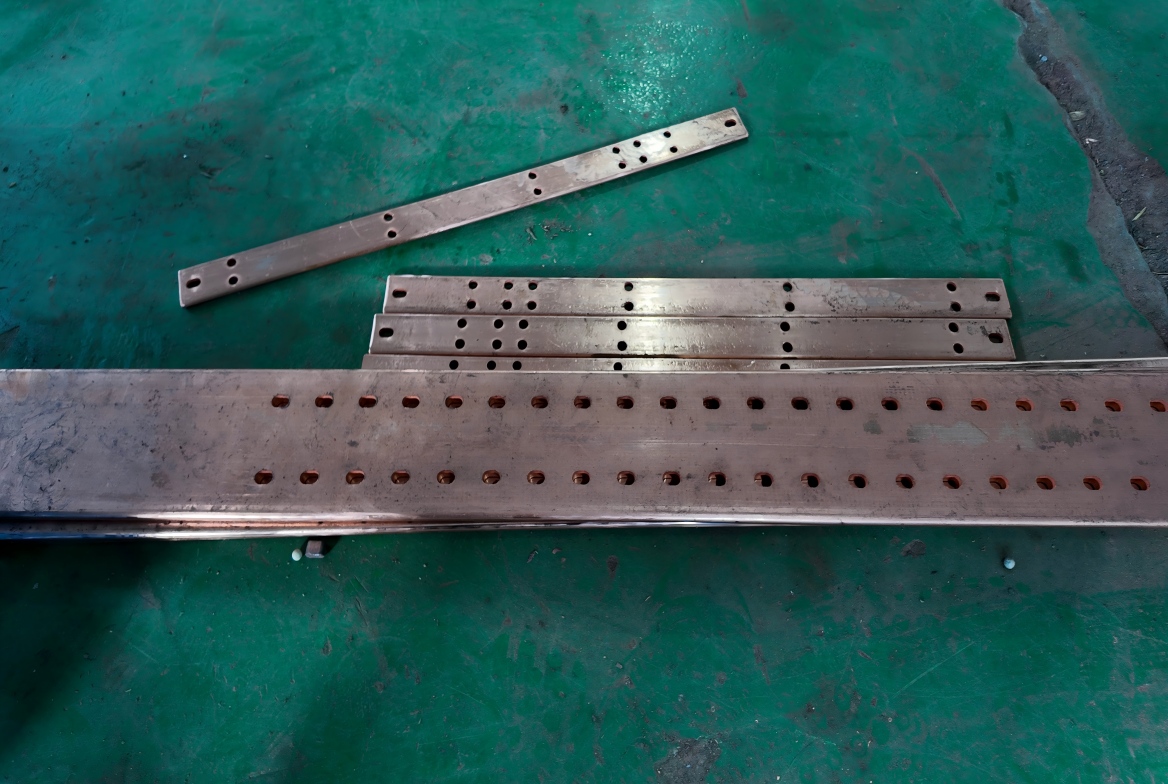
What Are Pure Copper Busbars and Why Choose Them
Basic Definition and Structure
Pure copper busbars are solid conductors—typically flat rectangular bars, but also round, square, or custom profiles—designed to distribute high electrical currents with minimal voltage drop. We make them from 99.90–99.99% purity copper for maximum electron flow. Sizes range from thin strips (a few mm thick) for compact electronics to massive bars (100+ mm wide) for substations carrying thousands of amps.
Purity Levels Impact on Busbar Performance
Higher purity means fewer impurities scattering electrons:
- 99.99% OFHC (C10100): Peak conductivity, no oxygen voids—best for critical high-current paths.
- 99.95% OF (C10200): Nearly as good, excellent ductility for bending.
- 99.90% ETP (C11000): Everyday workhorse—balanced cost and performance.
Quick Insight: For most busbars, 99.90% ETP is plenty—save OFHC for ultra-high amps or vacuum environments.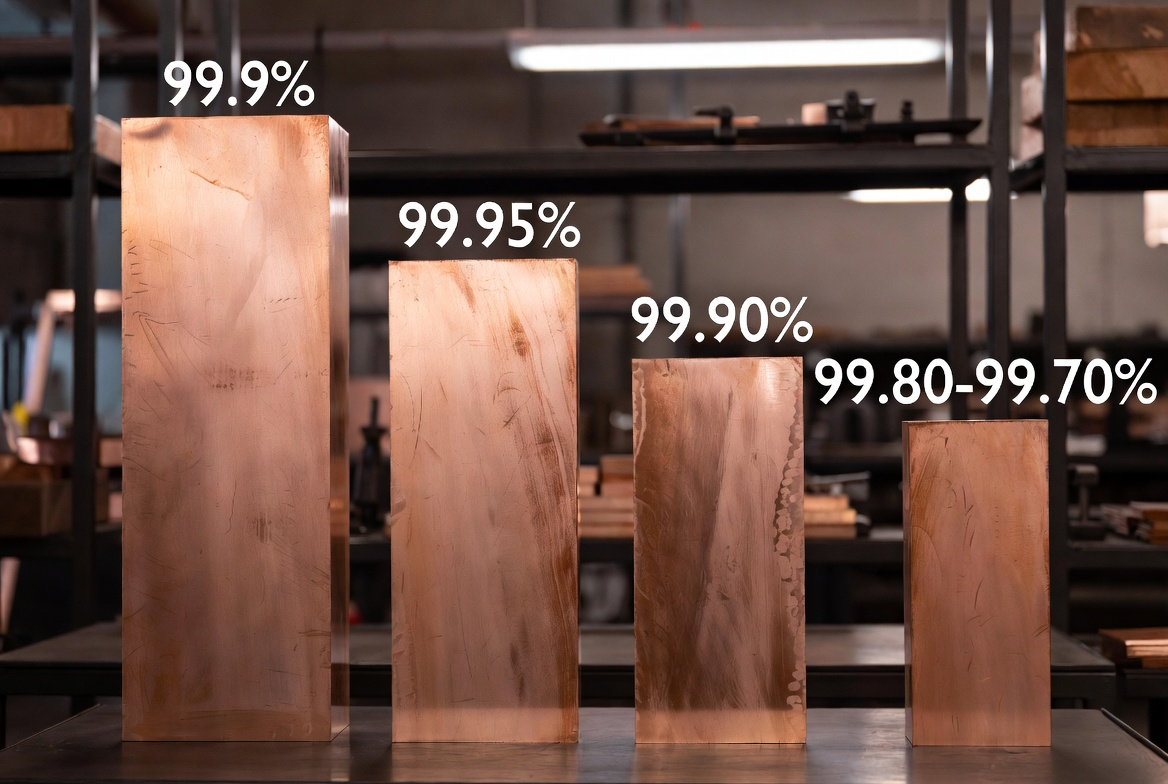
Detailed Applications of Pure Copper Busbars
Pure copper busbars handle massive currents efficiently—here’s where they make the biggest difference.
Power Substations and Grid Distribution
The backbone of switchgear—connecting transformers, breakers, and feeders. Low resistance means less heat and energy loss in transmission.
EV Battery Packs and Charging Infrastructure
Cell-to-module links and pack-to-inverter connections. Handle fast-charging currents (400–800A) without overheating, critical for range and safety.
Data Centers and Server Farms
Power rails feeding racks—low voltage drop keeps servers stable under load spikes from AI workloads.
Industrial Motors and Transformers
High-current links in heavy equipment—reliable under continuous duty and vibration.
Renewable Energy Inverters and Storage Systems
Connecting solar/wind inverters to batteries or grids—efficient for fluctuating loads.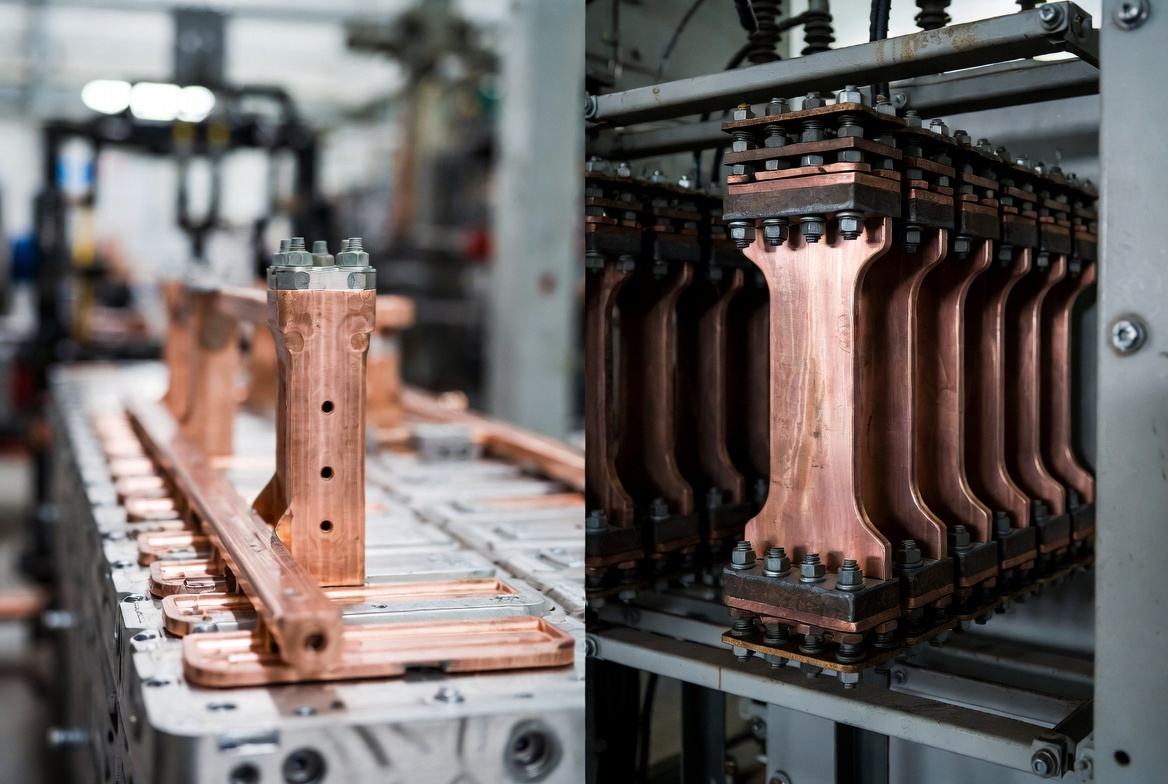
Surface Treatments for Pure Copper Busbars – Detailed Breakdown
Pure copper oxidizes, forming resistive layers at joints—plating prevents this while enhancing performance. Here’s the in-depth on our most common options.
Tin Plating: Cost-Effective Everyday Protection
- Thickness: 5–15 µm (standard 8–10 µm for busbars).
- Process: Electroplating in tin bath—uniform coverage even on complex shapes.
- Advantages: Good corrosion resistance in humid/air environments, excellent solderability, affordable.
- Best For: Indoor substations, general industrial—prevents oxidation without breaking budget.
- Limitations: Softer than nickel, wears faster in abrasive contacts.
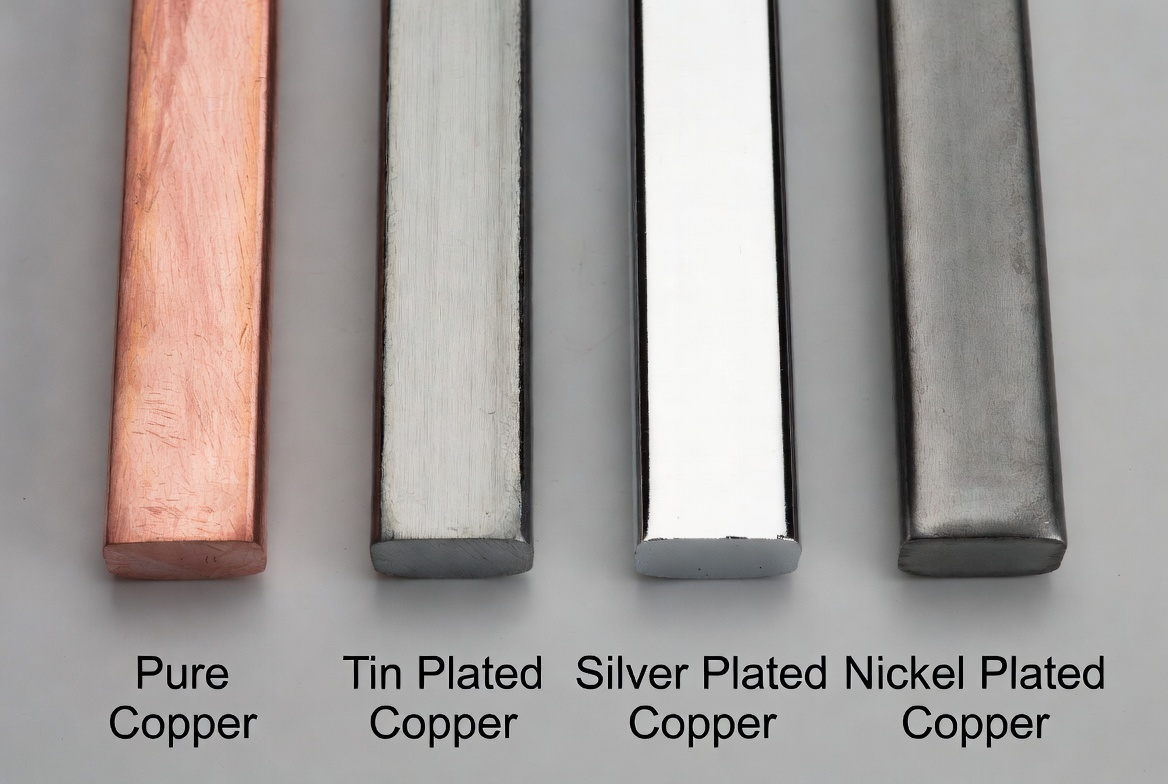
- Shop Note: Tin gives a matte silver look—functional and clean.
Silver Plating: Ultimate Low-Resistance for High-Performance Contacts
- Thickness: 2–10 µm (5 µm common for busbars).
- Process: Electroplating, often with nickel underlayer for adhesion.
- Advantages: Lowest contact resistance, excellent conductivity even at high frequency, superior in bolted joints.
- Best For: High-current EV connections, data centers—minimizes heat at interfaces.
- Limitations: Higher cost, tarnishes in sulfur environments (we add anti-tarnish).
- Shop Note: Silver gives that bright mirror finish—looks premium and performs best under load.
Nickel Plating: Hard Barrier for Harsh and Abrasive Environments
- Thickness: 10–25 µm.
- Process: Electroless or electroplating—hard, uniform layer.
- Advantages: Excellent wear resistance, high hardness, good in high-temp or abrasive contacts.
- Best For: Industrial motors, outdoor exposure—protects against mechanical damage.
- Limitations: Slightly higher resistance than tin/silver, not as solderable.
- Shop Note: Nickel gives a dull silver look—tough as nails for rough service.
Choosing and Combining Platings
- Tinfor general protection.
- Silverfor conductivity priority.
- Nickelfor durability.
- Combinations: Nickel under silver for best of both—common in EV busbars.
-
Machining Challenges for Pure Copper Busbars
Common Issues
- Gummy chips→ Soft copper sticks to tools.
- Thermal distortion→ Heat warps long bars.
- Burrs at holes→ Affects plating adhesion.
Practical Shop Solutions
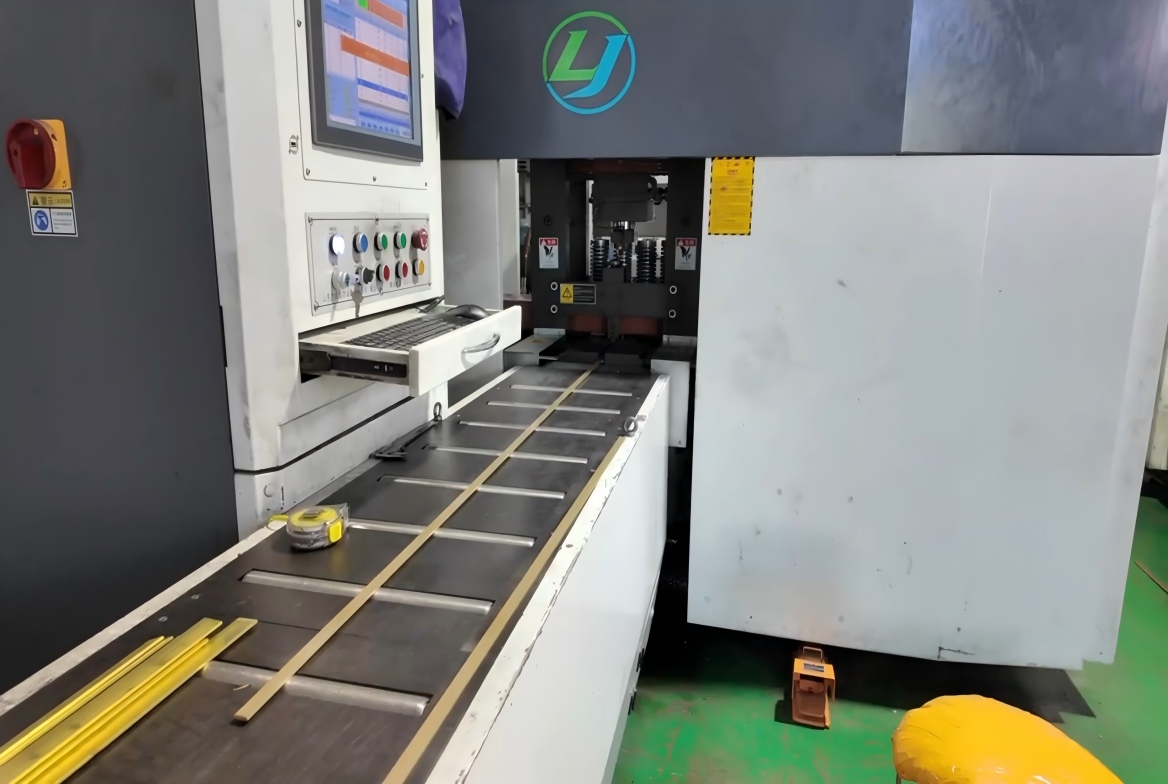
Engineering Experience: In our busbar projects at Cymber Metal for data center power rails, gummy chips caused poor surface finish on milled edges. We switched to PCD end mills with high-pressure coolant and climb milling—chips broke clean, surfaces stayed flat for perfect plating adhesion.
Pro Tip: Fixture long bars securely—vibration is the enemy of straightness.
-
Design and Tooling Tips for Busbars
- Shapes & Bends: Plan radii to avoid cracks.
- Holes & Slots: Chamfer edges for plating coverage.
- Plating Allowance: Add 0.02–0.05 mm for thickness.
- Current Rating: Size by ampacity tables—we help calculate.
Tooling & Parameter Recommendations
- Tool Material: PCD for edges; carbide for holes.
- Example Parameters:
- Spindle: 8,000–12,000 RPM
- Feed: 1,000–2,000 mm/min
- Depth: 0.5–2 mm
- Coolant: High-pressure—essential for clean cuts.
-
Common Deliverable Pure Copper Busbar Configurations
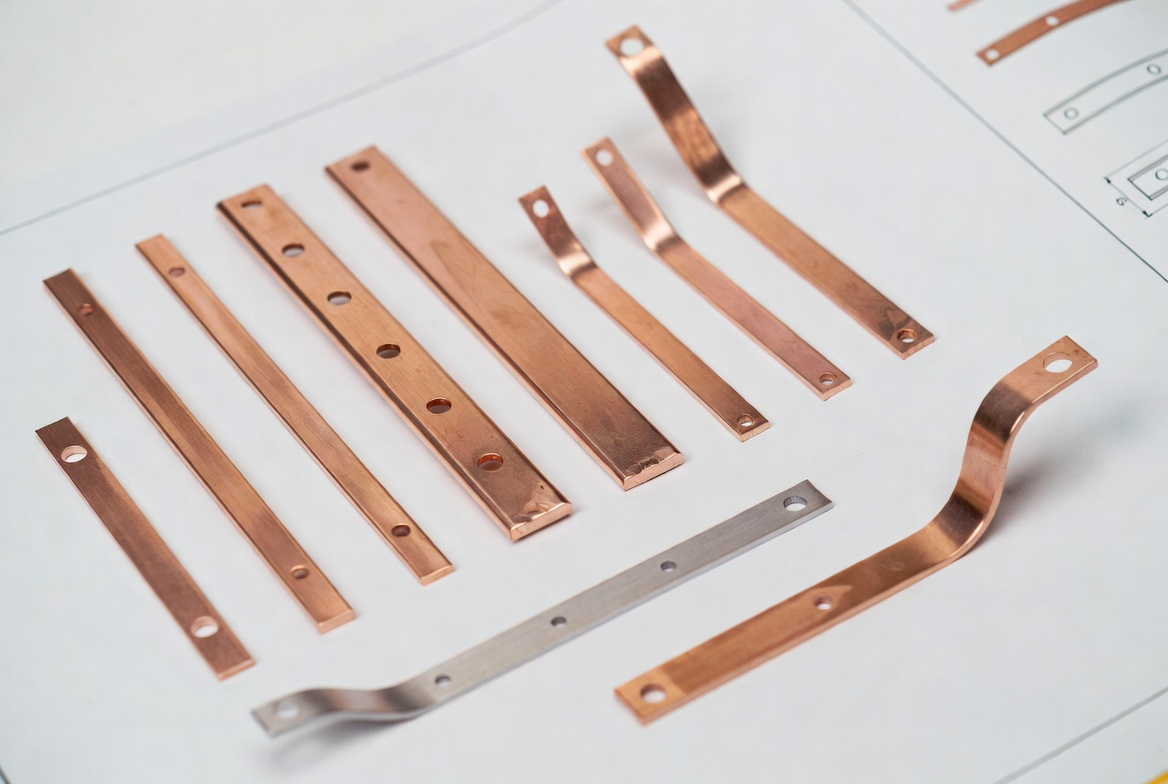
- Flat straight busbars with drilled holes
- Bent and formed busbars for compact layouts
- Laminated multi-layer busbars for high power
- Plated busbars (tin, silver, nickel)
- Custom punched, slotted, or threaded bars
- Insulated or coated assemblies
Final Thoughts
Pure copper busbars with the right plating solve the real challenges of power distribution—low resistance, heat management, and long-term reliability in demanding environments.
At Cymber Metal, we specialize in plated pure copper busbars for electrical applications:
- Silver-Plated Copper Busbar
- Tin-Plated Copper Busbar
- Pure Copper Strips and Coils
- Pure Copper Busbars
- Pure Copper Square Bars
- Nickel-Plated Copper Busbar
Take a look at ourElectrical Processing Workshopto see how we handle precision machining and plating in-house.
If you’re sourcing pure copper busbars—with tin, silver, or nickel plating for substations, EV packs, or data centers—Cymber Metal offers stocked material, expert plating, and flexible volumes.
Ready to talk specs? Download our pure copper catalog or contact our team.
Post time: Feb-11-2026