
Published: February 8, 2026
By: Zhen Liu, Pure Copper Technical Expert at Cymber Metal
Hi everyone—Zhen Liu here, your pure copper specialist at Cymber Metal. With EV battery packs demanding ever-higher power density and faster charging, pure copper has become indispensable for its unmatched electrical and thermal conductivity. In battery systems, even small resistance losses add up to heat and efficiency drops, so we rely on high-purity copper to keep currents flowing smoothly and temperatures under control.
In 2026, as battery designs push toward 800V architectures and solid-state tech, pure copper’s role is growing—from busbars to cooling plates. This guide shares what we’ve learned machining pure copper for EV battery projects: key grades, advantages, challenges, and tips to maximize performance.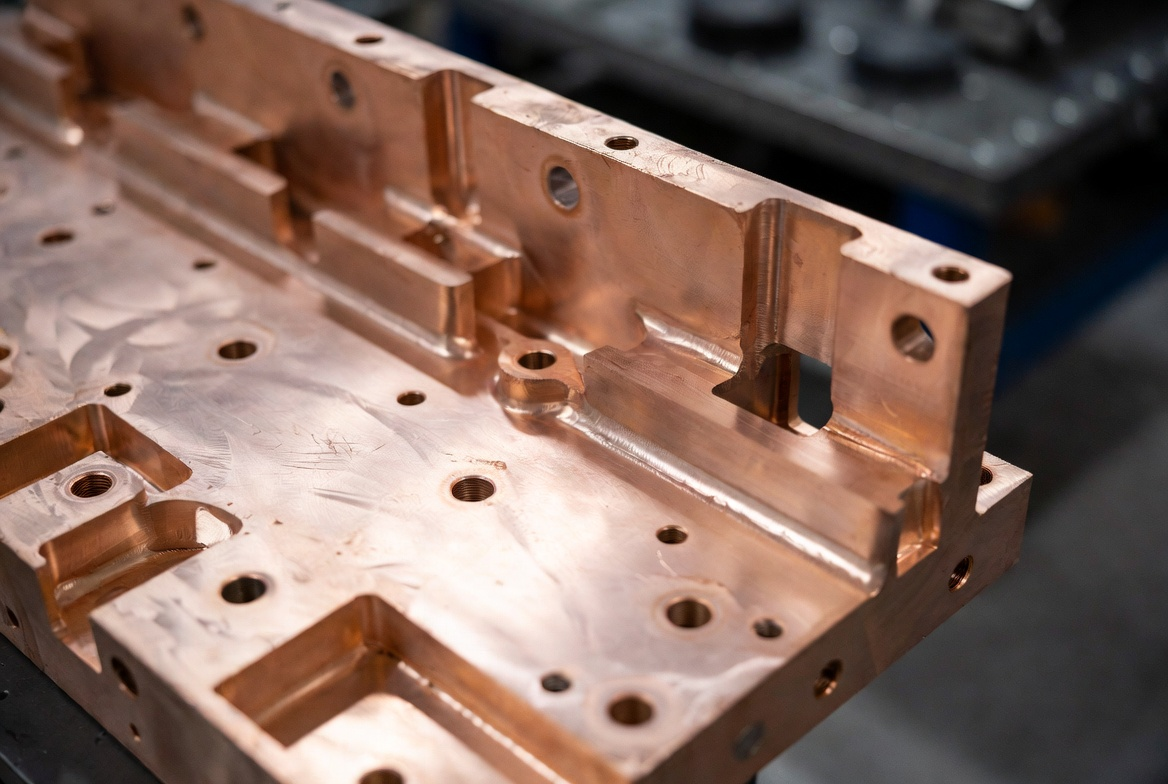
Pure Copper Grades for EV Battery Applications
Grade Selection Table
| Grade | Purity | Oxygen Content | Conductivity (% IACS) | Key Advantages in EV Batteries | Best Battery Components | Relative Cost |
|---|---|---|---|---|---|---|
| C10100 (OFHC) | 99.99% | <5 ppm | 101 | Peak conductivity, no voids, excellent thermal transfer | High-power connectors, cooling plates | High |
| C10200 (OF) | 99.95% | Oxygen-free | 101 | Superior ductility, weldability | Flexible interconnects, foils | Medium-High |
| C11000 (ETP) | 99.90% | ~200–400 ppm | 100–101 | Cost-effective, reliable performance | Standard busbars, terminals | Medium |
Quick Tip: OFHC (99.99%) for critical high-current paths in premium packs—worth the premium for reduced heat and longer life.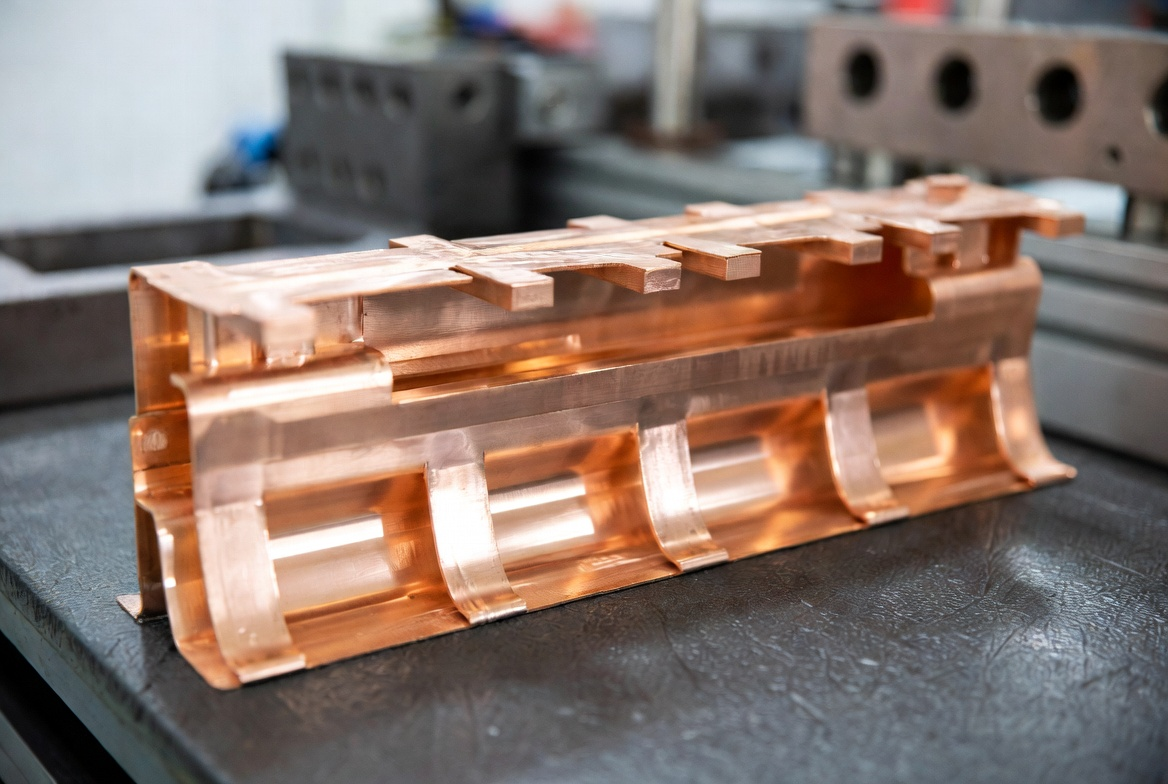
Why Pure Copper Excels in EV Batteries
Electrical Performance Advantages
- Ultra-high conductivity→ Minimizes voltage drop in high-current paths.
- Low resistance→ Reduces heat generation during fast charging.
- Excellent thermal conductivity→ Rapid heat spreading in cooling systems.
Mechanical and Durability Benefits
- Ductility→ Allows complex forming for interconnects.
- Corrosion resistance→ Stable in battery environments.
- Vibration tolerance→ Reliable in vehicle dynamics.
-
Challenges in Machining Pure Copper for EV Batteries
Common Issues
- Gummy chips and built-up edge→ Soft material sticks to tools.
- Thermal softening→ Heat from cutting affects dimensions.
- Surface oxidation→ Especially in ETP grades during processing.
Practical Solutions from the Shop
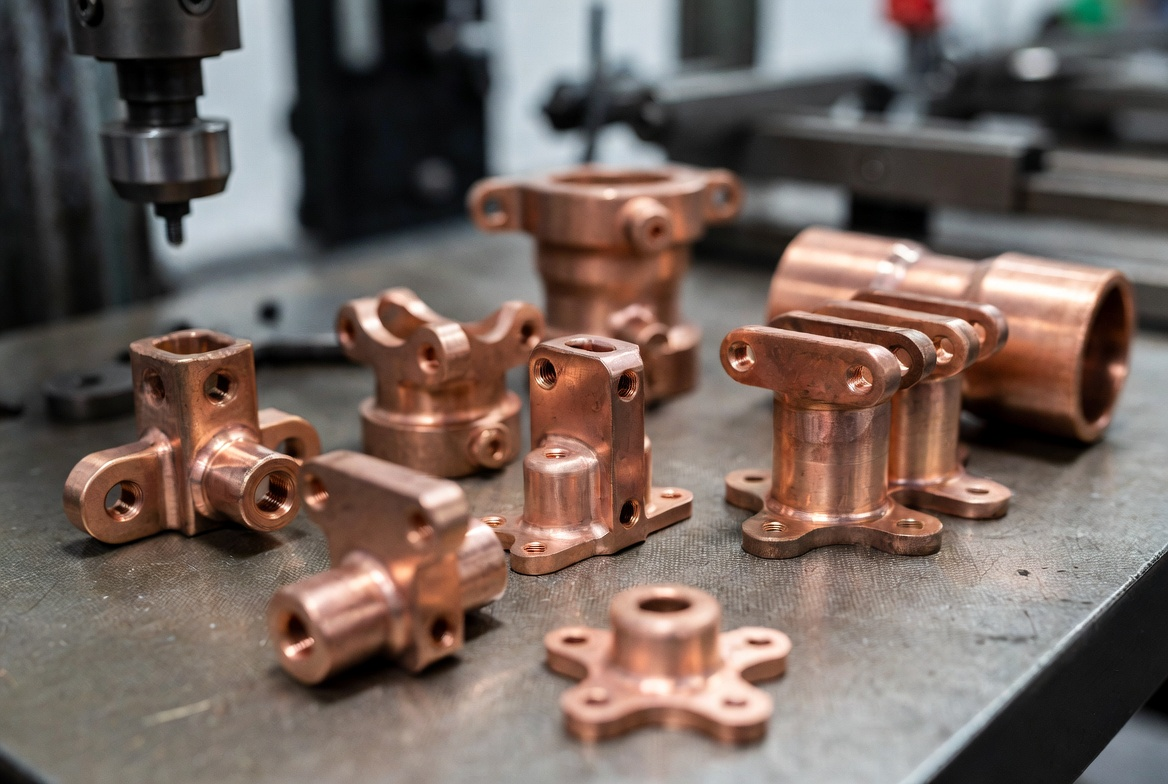
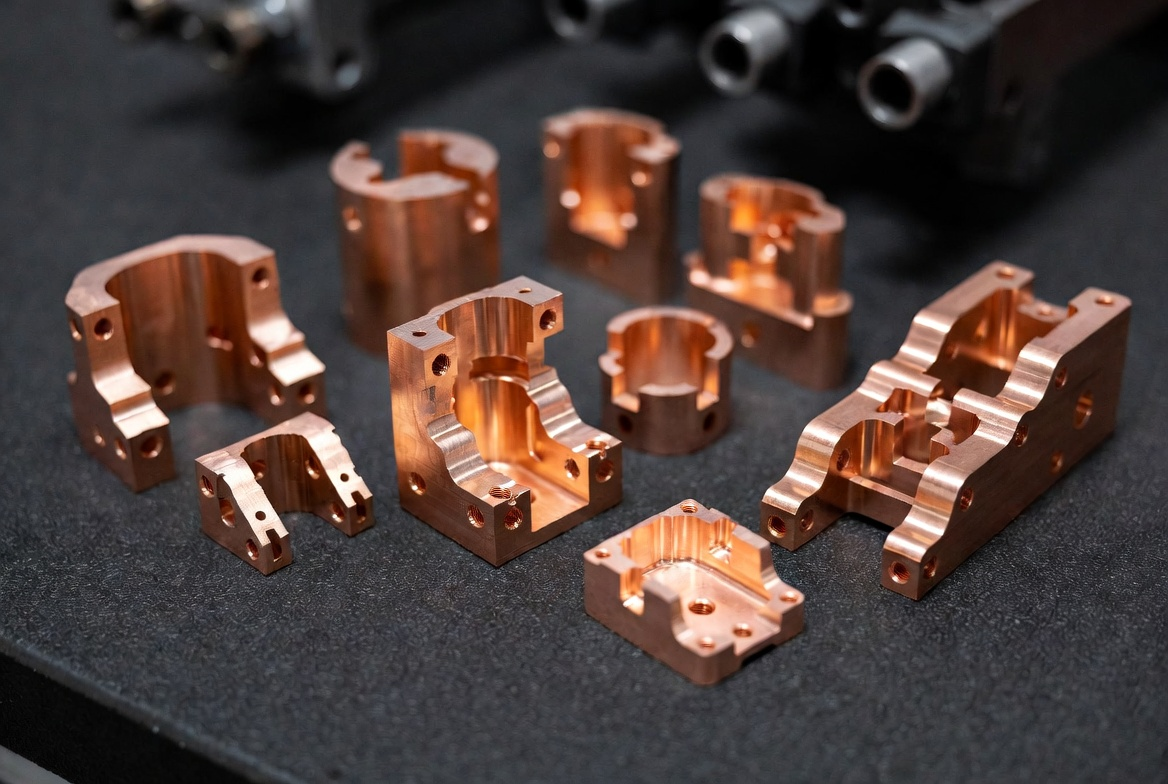
Engineering Experience: In our recent EV battery projects at Cymber Metal, machining 99.99% OFHC copper cooling plates for a major pack supplier, gummy chips caused surface defects early on. We switched to PCD tools with high-pressure coolant and optimized feeds—eliminating build-up and holding ±0.01 mm flatness while improving thermal performance in testing.
Pro Tip: Always use diamond-coated or PCD tooling for battery parts—carbide works but wears fast on pure copper’s softness.
-
Design Considerations for EV Battery Copper Parts
- Purity Selection: OFHC for thermal-critical cooling; ETP for cost-sensitive busbars.
- Tolerances: ±0.01 mm for contact surfaces.
- Surface Finish: Mirror polish (Ra <0.2 µm) for low resistance.
- Plating Options: Tin or silver coating for oxidation protection.
Tooling & Parameter Recommendations
- Tool Material: PCD primary for longevity.
- Example Parameters (C10100 OFHC):
- Spindle: 10,000–15,000 RPM
- Feed: 1,200–2,500 mm/min
- Depth: 0.3–1 mm axial
- Coolant: High-pressure flood—controls heat and chips.
-
Common Deliverable Parts We Machine for EV Batteries
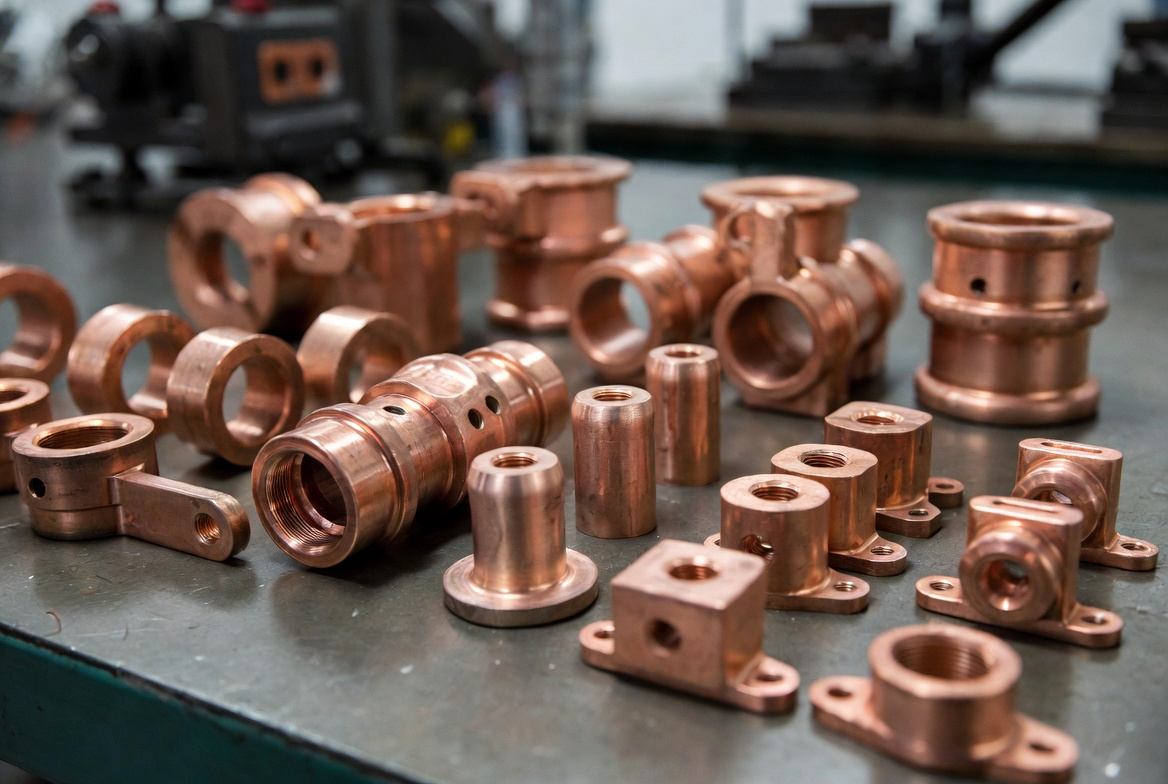
Engineers frequently specify pure copper for these battery components:
- Battery busbars and power bars
- Cell-to-cell connectors and tabs
- Cooling plates and channels
- High-current terminals and lugs
- Flexible foils and interconnects
- Module-to-pack links
Real-World EV Battery Applications
- High-voltage busbars in 800V packs
- Thermal management cooling systems
- Fast-charging terminal assemblies
- Battery management system contacts
- Power distribution in pack housing
Cost & Sustainability Factors in 2026
High-purity grades premium-priced, but recycled content and longer battery life offset costs—sustainability driving secondary copper use.
Final Thoughts
Pure copper’s conductivity and thermal properties solve key challenges in EV batteries—enabling faster charging, better efficiency, and longer range.
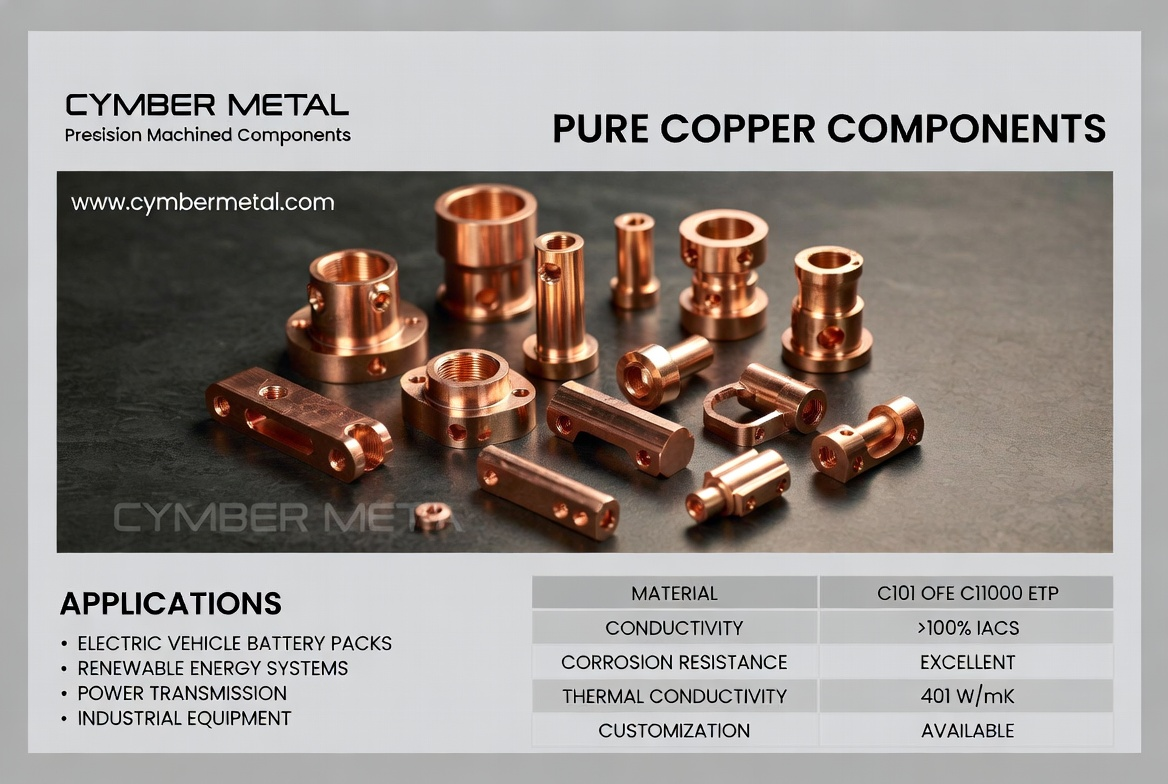
At Cymber Metal, we stock a full range of pure copper forms optimized for EV battery projects:
- Pure Copper Plates and Sheets
- Pure Copper Rods and Bars
- Pure Copper Strips and Coils
- Pure Copper Busbars
- Pure Copper Square Bars
- Custom Extruded Pure Copper Products
- Custom Machined Pure Copper Parts
If you’re sourcing pure copper for EV battery applications—whether busbars, cooling plates, connectors, or custom high-conductivity components—Cymber Metal offers stocked grades, precise processing, and flexible volumes from prototypes to full production.
Ready to discuss your battery project? Download our pure copper catalog or contact our team.
Post time: Feb-08-2026